Professional large appliance removal is worth considering when an appliance is heavy, stuck, unsafe to move, or needs special disposal. It can help with refrigerators, washers, dryers, stoves, and dishwashers. Kirkland Junk Removal helps property owners plan safer pickup while keeping reuse and local disposal rules in mind.
Moving a large appliance may look simple, but many jobs have hidden risks. A refrigerator may hold refrigerant. A washer may hold trapped water. A built-in stove may connect to gas or power lines. The safest choice depends on the appliance, the property, and the best way to move it.
Table of Contents
- When Is a Large Appliance Too Heavy or Awkward to Move Safely?
- When Should You Hire Professionals for Refrigerator Removal?
- Why Is Professional Removal Worth It When You Have Multiple Appliances?
- When Does Appliance Removal Require Special Disposal or Recycling?
- Should You Hire Help When an Appliance Is Stuck or Built In?
- When Is Professional Appliance Removal Important for a Property Turnover?
- How Can You Decide Whether Professional Large Appliance Removal Is Worth It?
- Key Takeaways
- Frequently Asked Questions
- Conclusion
When Is a Large Appliance Too Heavy or Awkward to Move Safely?
A large appliance may be too risky to move when one person cannot control its weight, shape, or balance. Refrigerators, washers, dryers, and stoves can shift without warning. A safe move needs room, proper tools, and a clear path from the appliance to the vehicle.
How appliance weight and design create lifting risks
Large appliances can be hard to grip. Their smooth sides give little hand support. Doors, cords, hoses, and loose parts can catch on walls. A tall refrigerator may tip at a doorway. A washer may still hold water and become harder to control.
Homeowners can handle simple checks on their own. They can remove food, shelves, loose racks, and personal items. They can read the owner’s guide and clear the path. However, they should not try to lift an appliance that needs more than one capable person.
This is also different from smaller junk removal jobs. A small item may be carried by one person. A large appliance needs better control, more space, and a safe loading plan. If those needs are not clear, professional help may be the safer choice.
Why stairs, narrow doorways, and uneven surfaces matter
Stairs create a serious problem because the appliance must stay balanced at every step. Narrow doors may require careful turns. Uneven driveways, wet floors, and soft ground can make a dolly slip. A fall can hurt someone or damage floors, trim, cabinets, or the appliance.
Professional large appliance removal is often sensible when the route has stairs, tight corners, long halls, or uneven ground. A removal crew can check the path before moving anything. That planning helps prevent rushed lifting and avoidable damage in Kirkland homes and businesses.
When Should You Hire Professionals for Refrigerator Removal?
Professional help makes sense for refrigerator removal when the unit is heavy, leaking, connected to a water line, or ready for disposal. Refrigerators need more care than many household items. They have sealed cooling parts and may contain refrigerant.
What makes refrigerators different from other appliances
A refrigerator may have glass shelves, sharp metal edges, a water filter, an ice maker, and a compressor. Before moving one, the owner should remove food and loose shelves. The water supply should be shut off by a qualified person when the connection is hard to reach or unclear.
A homeowner can wipe the inside, unplug the unit, and secure the doors for a short move. The refrigerator should not be dragged across the floor. It should stay upright as much as possible. If it must be tilted, the owner should follow the maker’s instructions before plugging it in again.
These steps are suitable for basic preparation. They do not mean a homeowner should handle every part of the move. Heavy lifting, stairs, water lines, and loading can still call for trained help.
How refrigerant and compressor parts affect disposal
Refrigerant is a substance used in cooling systems. It may need proper recovery before the appliance is processed. The compressor, coils, wiring, metal shell, and plastic parts may also need different handling.
That is why an old refrigerator should not simply go into regular household trash. Local facilities may have special rules for appliances with cooling systems. Kirkland Junk Removal can help Kirkland property owners arrange refrigerator removal without asking them to handle sealed cooling parts themselves. The team can identify the item and guide it toward a suitable disposal or recycling route.
Why Is Professional Removal Worth It When You Have Multiple Appliances?
Professional removal can help when a property has several large appliances waiting for pickup. Moving a refrigerator, washer, dryer, stove, and dishwasher one at a time can take tools, storage space, and several trips. One planned pickup may make the whole job easier to manage.
Coordinating refrigerator, washer, dryer, stove, and dishwasher removal
Each appliance may need a different first step. A washer may need its hoses drained. A dryer may need its vent disconnected. A dishwasher may sit below a counter and connect to water, power, or a drain. A stove may connect to electricity or gas and should not be pulled out by force.
Homeowners can remove loose items and clean surfaces themselves. They should leave difficult utility connections to a qualified professional. Once the appliances are safe to move, a removal crew can load them in a planned order. This helps keep doors, hallways, and loading areas clear.
The same idea applies to business owners. A restaurant, rental property, or small retail site may have several unwanted appliances after an update. A clear list of items helps the crew prepare and may prevent delays during pickup.
How one scheduled pickup can simplify a property cleanout
Several appliances often appear during a kitchen update, rental turnover, estate cleanout, or garage project. They can block work areas and take up useful storage space. A planned appliance pickup lets the owner focus on repairs, cleaning, painting, or listing preparation.
A cleanout service removes unwanted items from a home or property and takes them to the proper next destination. Large appliances may be part of that work, along with other approved household items. Kirkland Junk Removal serves property owners and can help identify which appliances are ready for removal before the appointment.
When Does Appliance Removal Require Special Disposal or Recycling?
Appliance removal may need special handling when an item contains refrigerant, electronic parts, oils, batteries, or mixed materials. The right process depends on the appliance and local rules. Recycling may be possible, but the item must reach a facility that can process it.
Which appliance materials and parts may be recovered
Large appliances often contain steel, aluminum, copper, glass, plastic, wiring, and electronic parts. Some materials may be separated and sent for recycling. Reuse may also be possible when an appliance is clean, complete, and working.
Owners should not assume that every part belongs in a curbside recycling bin. Curbside programs often accept only certain household materials. A large refrigerator or dishwasher usually needs a special drop-off or pickup plan. A removal provider can help sort the item by type and condition.
This matters for both homes and commercial spaces. Leaving old appliances outside can create clutter and may expose them to rain or damage. Sharing the item’s condition before pickup helps the team plan the next step.
Why local disposal rules can affect the removal process
Rules can differ by city, county, facility, and appliance type. Some sites accept large appliances only during set hours. Others may require proof that cooling equipment was handled correctly. Property owners should check current guidance if they plan to deliver an appliance themselves.
Professional large appliance removal can reduce this guesswork. The crew can review the item before loading it and follow the destination’s requirements. Kirkland Junk Removal can help homeowners, landlords, and business owners prepare appliances for a suitable pickup route. The owner should still share any leaks, damage, or utility connections before removal.
Should You Hire Help When an Appliance Is Stuck or Built In?
Professional help is usually safer when an appliance is stuck, built in, or connected to utilities. Pulling too hard can damage cabinets, flooring, walls, pipes, wires, or gas lines. A simple removal job can become a repair problem when the unit is forced out.
Removing connected or tightly fitted appliances safely
Built-in dishwashers often sit under a countertop. Wall ovens may fit tightly inside cabinets. Cooktops can connect below the counter. Refrigerators may have water lines or custom trim. These items need careful checks before anyone tries to move them.
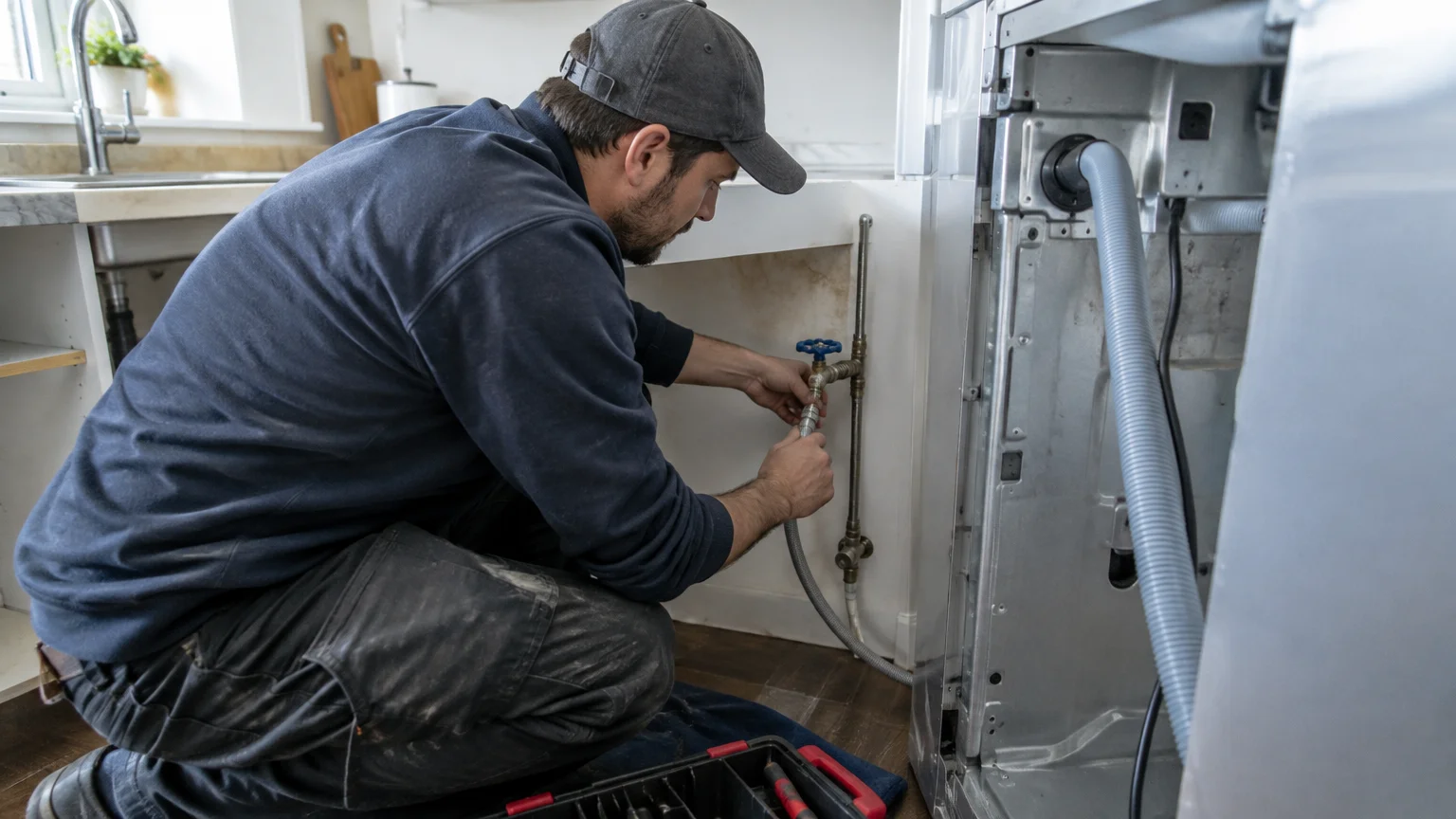
A homeowner can clear nearby items, open cabinet doors, and find the owner’s manual. They should not disconnect a gas line or an unfamiliar electrical connection without qualified help. Water should also be shut off before a connected appliance moves, using the proper shutoff point.
Simple cleaning and preparation do not require a professional. Utility work, difficult disconnection, and heavy lifting may. Knowing this difference helps owners avoid taking an unsafe step.
Preventing damage to floors, cabinets, walls, and utility lines
Appliance crews often use moving blankets, straps, boards, and appliance dollies. These tools help spread weight and protect finished surfaces. The route should be measured before the appliance moves. Doors may come off the appliance, but only when that is safe and useful.
The safest plan may be to have a qualified tradesperson disconnect the appliance first. A removal team can then move it without pulling on pipes or wires. This two-step plan can help during kitchen renovations, rental repairs, and property cleanouts.
When Is Professional Appliance Removal Important for a Property Turnover?
Professional appliance removal matters during a property turnover when old units delay cleaning, repairs, inspections, or a new tenant’s move-in. It can also help owners prepare listings, renovations, and inherited properties where several unwanted appliances remain.
Preparing rentals, listings, renovations, and inherited properties
Landlords may find broken washers or dryers after a tenant leaves. Sellers may replace an old refrigerator before listing a home. Renovation teams may need a clear kitchen before changing cabinets and floors. Families handling an inherited property may face appliances that are too heavy to move alone.
In each case, timing matters. An appliance may block a work area or make the property look unfinished. Removing it early can help cleaners, contractors, and property managers reach the space. It also keeps the owner from storing a bulky item while waiting for a later disposal plan.
Business owners face similar issues during store changes or office moves. Old break-room appliances can block workers and supplies. Planned removal can help keep the work area clear and safer.
How removal supports a cleaner, more useful space
A cleared space is easier to sweep, inspect, repair, and measure. It may reveal water damage behind a washer or wall damage behind a refrigerator. Early removal also gives the owner time to fix floors or cabinets before the space is used again.
Kirkland Junk Removal helps property owners plan appliance pickup around their project needs. The owner should share the appliance type, location, access route, and known connection. Clear details help the removal team prepare and avoid surprises at the property.
How Can You Decide Whether Professional Large Appliance Removal Is Worth It?
Professional large appliance removal is worth considering when safety, access, timing, or disposal rules make a do-it-yourself move hard. A homeowner does not need professional help for every appliance. Simple cleaning and basic preparation may be safe, but lifting, disconnecting, and disposal can need trained support.
Questions to ask before moving an appliance yourself
Before starting, the owner should ask:
- Can the appliance move without lifting beyond the owner’s safe ability?
- Is the path clear, level, dry, and wide enough?
- Does the appliance connect to gas, water, electricity, or a drain?
- Could it contain refrigerant, oil, batteries, or other controlled parts?
- Is there a confirmed destination that accepts this appliance type?
If any safety answer is unclear, stopping is the better choice. A homeowner can remove loose contents and clear the area. They should not risk a back injury, damaged floor, or utility leak to avoid arranging help.
What to expect when arranging a local removal service
A local removal service will need basic details before pickup. The owner should explain the appliance type, location, access conditions, and whether it is built in or connected. Photos may help the team understand tight spaces, stairs, gates, or unusual access.
The final service details should be confirmed before the appointment. The final cost is confirmed on a quote and may depend on the appliance size, access, condition, urgency, and disposal needs. Kirkland Junk Removal can help Kirkland customers choose a practical plan for appliance removal and disposal.
Key Takeaways
- Heavy or awkward appliances can create injury and property risks.
- Refrigerators may need special care because of refrigerant and cooling parts.
- Built-in appliances should be disconnected carefully before removal.
- Several appliances may be easier to plan as one organized pickup.
- Local rules may affect appliance recycling and disposal.
Frequently Asked Questions
Is appliance removal available near me?
Stores, utilities, local programs, and removal services may offer appliance collection under their own rules. Availability can change, and programs may have conditions about item type, location, or timing. Owners should confirm current pickup requirements directly. A private removal service will confirm its pickup details before work begins.
How can someone get rid of an old refrigerator?
An owner can check whether the refrigerator is accepted by a local appliance facility, retailer program, or removal service. Food and loose shelves should be removed first. The unit should not go with regular trash unless local guidance clearly allows it. Cooling parts may need special handling before recycling.
Can homeowners remove a washer and dryer themselves?
Homeowners can often clean the units and remove loose items themselves. Moving them is different. Water, vent, power, stairs, and tight doorways can create risks. If the route is hard or the connections are unclear, professional help is safer than forcing the appliances through the property.
What happens to old appliances after pickup?
The next step depends on the appliance’s condition and materials. Some units may be reused. Others may be separated for metal, plastic, glass, or electronic recycling. Refrigerators and similar cooling appliances may need special processing. The final destination should follow local facility rules.
What should an owner tell a removal company?
The owner should share the appliance type, size, location, condition, and access route. Stairs, narrow doors, gates, tight parking, and built-in fittings are important details. The owner should also mention water, gas, electrical, or refrigerant concerns so the team can plan the safest next step.
Conclusion
Large appliances are not always simple household items. Weight, access, utility connections, refrigerant, and local disposal rules can affect the job. Homeowners may handle cleaning and basic preparation, but difficult lifting and special disposal need more care.
When a refrigerator, washer, dryer, stove, or dishwasher is unsafe to move alone, professional large appliance removal can make the project easier to manage. Contact us to arrange appliance removal with Kirkland Junk Removal.